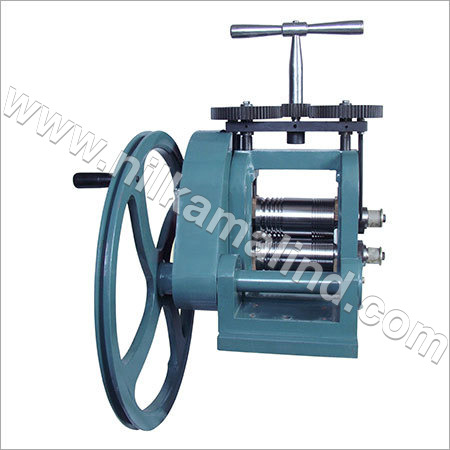
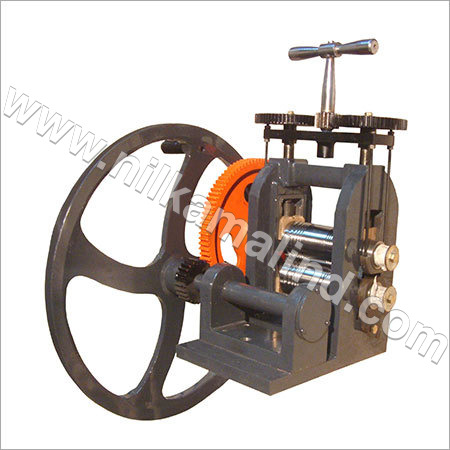
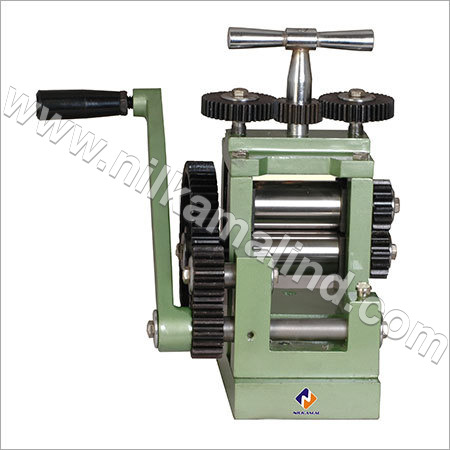
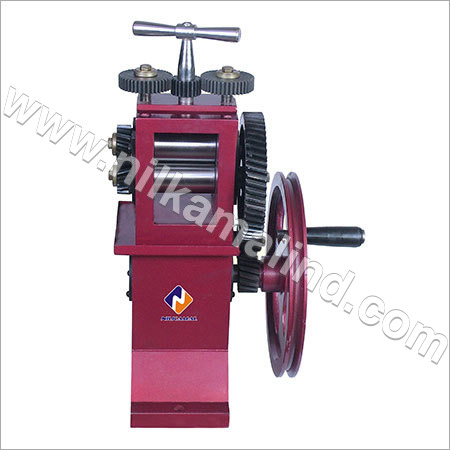
About Jewelers Rolling Mill Hand Operated
Jewelers Rolling Mill Hand Operated
Backed by the rich industry experience, we have been able to offer our clients excellent quality Jewelers Rolling Mill Hand Operated. This rolling mill is precisely manufactured using high grade raw materials and advanced technology. Provide optimum performance without any trouble, the offered rolling mill is designed in compliance with international standards. Tested on different parameters under the supervision of our quality experts, clients can avail this Jewelers Rolling Mill Hand Operated from us at very affordable rates.
| Product Details |
| Product Code | A-60 |
| Product Name | Jewelers Rolling Mill Hand Operated |
| Brand Name | Nilkamal |
| Origin place | Rajkot, Gujarat, India |
| Specifications | Size: 6 X 3 |
| Applications | Making Jewelery |
| Other Details | Tar Pata Combined |
| Customizations | Possible |
|
|
| Price & Order |
| Price | Get Mfg. Rates |
| Payment Terms | Cash, Part payment, Other |
| Minimum order qty | One Machine |
| Sample Availability | Available at our factory |
|
|
| Packing & Delivery |
| Packing Type | As per Your requirement |
| Delivery lead time | 15 Days Max |
Effortless Metal Forming for JewelersThis rolling mill is designed to make metal sheet and wire fabrication easier for goldsmiths and jewelers. Its 4:1 gear ratio provides substantial leverage, allowing users to process metals with less effort. Whether you work in gold, silver, copper, or brass, the machine ensures smooth, high-precision rolling tailored for intricate jewelry work.
Versatile Rolling CapabilityFeaturing interchangeable flat and patterned rollers, the mill allows for both smooth and textured finishes on your metalwork. Its wide 150 mm roller length and adjustable gap make it suitable for a range of sheet and wire sizes, supporting creative projects and technical requirements alike.
Solid, User-Friendly ConstructionBuilt from robust materials and weighing approximately 50 kg, this hand-operated mill is engineered for stability and reliability. Manual operation provides complete control over your rolling speed and pressure, ensuring accuracy. Table-mountable and easy to install, it is perfect for small workshops and personal studios.
FAQs of Jewelers Rolling Mill Hand Operated:
Q: How do I properly use the jewelers rolling mill for sheet and wire fabrication?
A: To use the rolling mill, secure it to a sturdy table using the mounting holes provided. Adjust the roller gap to your metals thickness, place the metal sheet or wire between the rollers, and turn the hand crank gradually to process the material. Ensure even pressure for consistent surface finishes.
Q: What types of metals can be processed with this rolling mill?
A: This rolling mill is suitable for processing gold, silver, brass, and copper. It handles sheet thicknesses up to 5 mm, sheet widths up to 130 mm, and wire diameters up to 5 mm, accommodating most jewelry and small metal forming applications.
Q: When is maintenance required for effective operation?
A: Regular maintenance includes routine lubrication of the roller surfaces and gears to ensure smooth operation and prevent wear. Its advisable to clean and lubricate moving parts after each use or at least weekly, depending on frequency of operation.
Q: Where should the rolling mill be installed for optimal use?
A: For safe and efficient use, the rolling mill should be installed on a strong, level table or workbench capable of supporting its approximate 50 kg weight. Ensure enough surrounding workspace for handling metal pieces and operating the hand crank comfortably.
Q: What is the benefit of the 4:1 gear ratio in this rolling mill?
A: The 4:1 gear ratio means the operator applies less manual force to achieve the same rolling effect, making it much easier to process metals, especially under thicker or harder stock. This reduces fatigue and improves accuracy during prolonged use.
Q: How is the roller gap adjusted and why is this important?
A: The roller gap can be adjusted using the knobs or levers provided on the mill. Adjusting the gap allows you to accommodate different metal thicknesses, ensuring proper compression and achieving the desired surface and dimensional finish for sheets or wires.







 Send Inquiry


 Send Inquiry